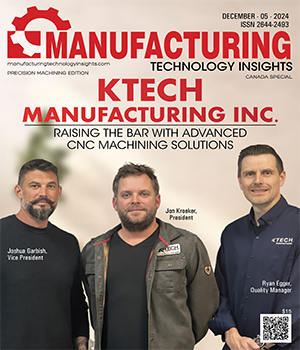

Canada’s precision machining sector has long been a cornerstone of its advanced manufacturing landscape, serving industries like aerospace, automotive, medical, and energy with high-precision components critical for cutting-edge applications. In recent years, the sector has experienced rapid advancements fueled by technological innovation, workforce evolution, and a stronger commitment to sustainability. As 2024 unfolds, Canada’s precision machining industry stands at the crossroads of growth and challenge.
The adoption of Industry 4.0 technologies—such as artificial intelligence (AI), machine learning, and the Industrial Internet of Things (IIoT)—is transforming the precision machining landscape. Companies across Canada are increasingly incorporating smart technologies into their workflows, optimizing productivity and quality through predictive maintenance, real-time monitoring, and advanced analytics. By embedding sensors and using data-driven insights, precision machining facilities can anticipate maintenance needs, reduce downtimes, and make adjustments on the fly, thereby improving product accuracy and reducing waste.
AI-powered tools are also enabling companies to enhance quality control. By analyzing vast amounts of production data, AI algorithms detect minute deviations that would otherwise go unnoticed, allowing machinists to take corrective measures before errors escalate. The benefits are twofold: superior product quality and significant cost savings. Notably, precision machining in Canada is seeing more integration of digital twins—virtual representations of machines or products—to test performance and make modifications in a risk-free environment.
The Canadian government and industry associations can play a vital role in supporting this transformation by offering incentives for technology adoption, funding training programs, and facilitating public-private partnerships that drive innovation and skills development. By continuing to invest in technology, sustainability, and workforce development, Canada’s precision machining industry is well-positioned not only to meet domestic needs but also to compete on the global stage. The challenge lies in balancing innovation with cost-effectiveness and in ensuring that the industry can adapt to both the technological and ecological demands of the modern manufacturing era.